
Posted by Premium Decking Supply on Jul 15th 2026
Why Trex Hideaway Fasteners Make a Difference on Your Deck
The fastening system is one of those decisions most homeowners don't think about until they're standing on someone else's deck wondering why theirs looks different. Hidden fasteners are usually the answer.
What They Actually Do
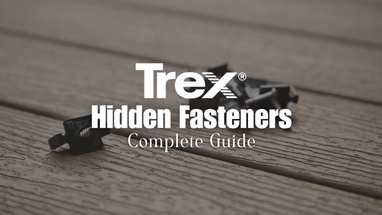
Trex hidden fasteners secure grooved composite boards from the side rather than through the top surface. Each clip slides into the groove of one board, gets screwed into the joist below, then the next board slides in and locks it in place. No exposed screw heads, no holes through the face, no hardware visible from above.
The clips also do something face screws can't do automatically - they set consistent spacing between every board. That means straighter lines and more uniform gaps across the entire deck without relying on constant manual adjustments.
The Trex Hideaway System Has a Few Clip Types
Universal clips handle most of the field boards. Starter clips go in first at the perimeter to anchor the outer edge of the layout. Butt joint clips provide extra reinforcement where two boards meet over a joist. For stairs, borders, and solid-edge boards that don't have grooves, Trex's Cortex plug system offers a color-matched screw-and-plug alternative that still keeps hardware off the visible surface.
Where They Don't Work
Hidden fasteners are for grooved boards on the main deck surface. Stair treads, picture frame borders, and solid edge boards need face fastening - either with screws or the Cortex plug system. Trying to use hidden clips where they weren't designed to go creates structural problems.
Are They Worth It?
For most composite deck builds, yes. The cleaner surface, automatic spacing, and long-term performance under temperature changes make the Trex Hideaway system the preferred choice for grooved Trex decking.