
Posted by Premium Decking Supply on Jul 2nd 2026
Pier or Dock? What Waterfront Homeowners Should Know First
Most waterfront homeowners use "pier" and "dock" like they mean the same thing. In casual conversation, that's fine. But when it's time to build, permit, or buy property - the distinction matters a lot more than people expect.
The Structural Difference
A pier is a fixed, elevated structure built on driven pilings with water flowing freely underneath. It extends from the shoreline out over the water and is primarily used for recreation, fishing, and access to deeper water from a shallow shoreline.
A dock sits at or near water level and is built around the boat - for mooring, boarding, and launching. Floating docks rise and fall with water levels, making them the practical choice for inland lakes with seasonal fluctuation. Fixed docks suit tidal environments with predictable water levels.
Cost Is Where It Gets Real
The price gap between the two is significant. A quality floating dock system typically runs $15,000-$50,000 installed. A residential pier - with pilings, permits, and an end platform - can exceed $100,000. In many situations, a floating dock delivers 80% of the functionality at a fraction of the cost.
Permits Are More Complex Than People Realize
Both structures require permits, but piers face more regulatory scrutiny. As permanent fixed structures in navigable water, they typically trigger federal Army Corps of Engineers review on top of state and local requirements. Floating docks are often classified as temporary or removable structures, which can mean a lighter permitting process and lower insurance costs.
Which One Do You Actually Need?
Need to reach deeper water from a shallow shore - a pier makes sense. Need to moor, launch, or board a boat - a dock is the right tool. Many waterfront properties eventually end up with both.
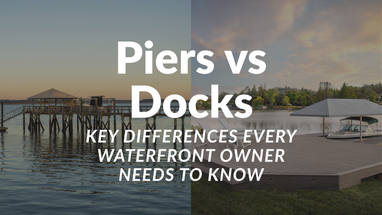
Read the full "Piers vs Docks: Key Differences Every Waterfront Owner Needs to Know" guide here!